


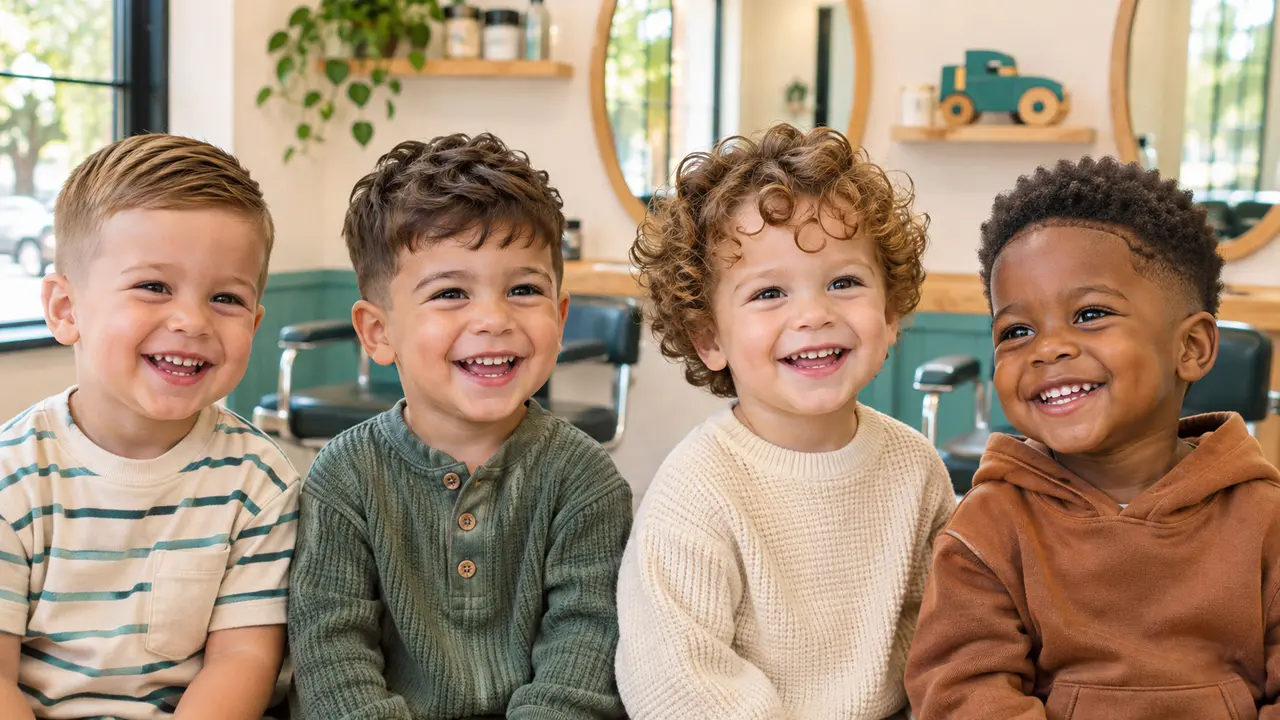

A good toddler boy haircut should suit your child’s natural hair,
stay comfortable during play and look presentable without demanding
daily styling. Short textured cuts, gentle tapers, curly crops and
classic side-swept styles are among the easiest choices. The best option
is not necessarily the trendiest one—it is the cut your toddler can
tolerate and your family can maintain between appointments.
Key Takeaways
- Choose the haircut around your toddler’s hair texture, sensory
comfort and daily routine. - Ask for soft, blended transitions instead of a very tight skin fade
if you want an easier, more child-friendly grow-out. - Keep curls slightly longer so their natural pattern remains
visible. - Bring clear front, side and back reference photos to the
barber. - A successful first haircut may be brief and imperfect; comfort
matters more than a flawless finish.
15 Toddler Boy
Haircuts Worth Considering
The same haircut can look quite different on fine, thick, straight,
wavy or curly hair. Use these ideas as starting points and let the
barber adjust the length and shape to suit your child.
1. Classic short back and
sides
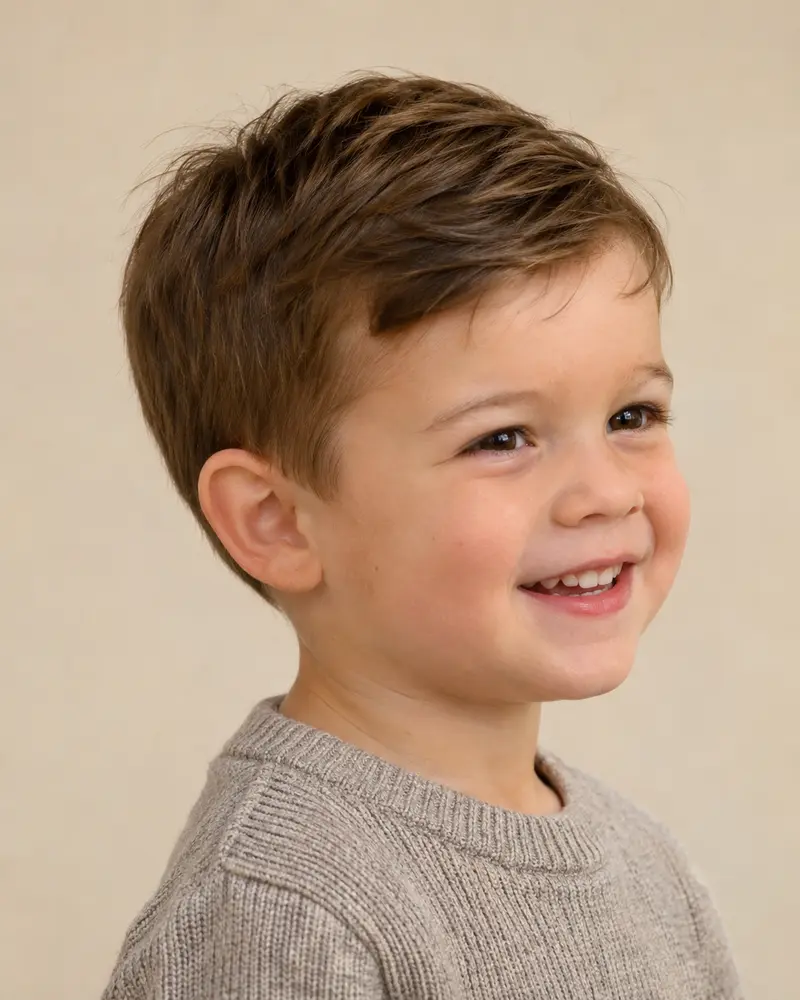
This familiar cut keeps the sides and back tidy while leaving enough
length on top to brush forward or to one side. It works especially well
for straight or slightly wavy hair and does not require gels or careful
styling.
Ask the barber for a soft scissor cut or a low clipper grade around
the sides, blended gradually into the top. Keeping the transition gentle
makes the haircut look softer on a young child and allows it to grow out
neatly.
Best for: Straight, fine or medium-density
hair
Upkeep: A trim about every 6–8 weeks
2. Textured crop
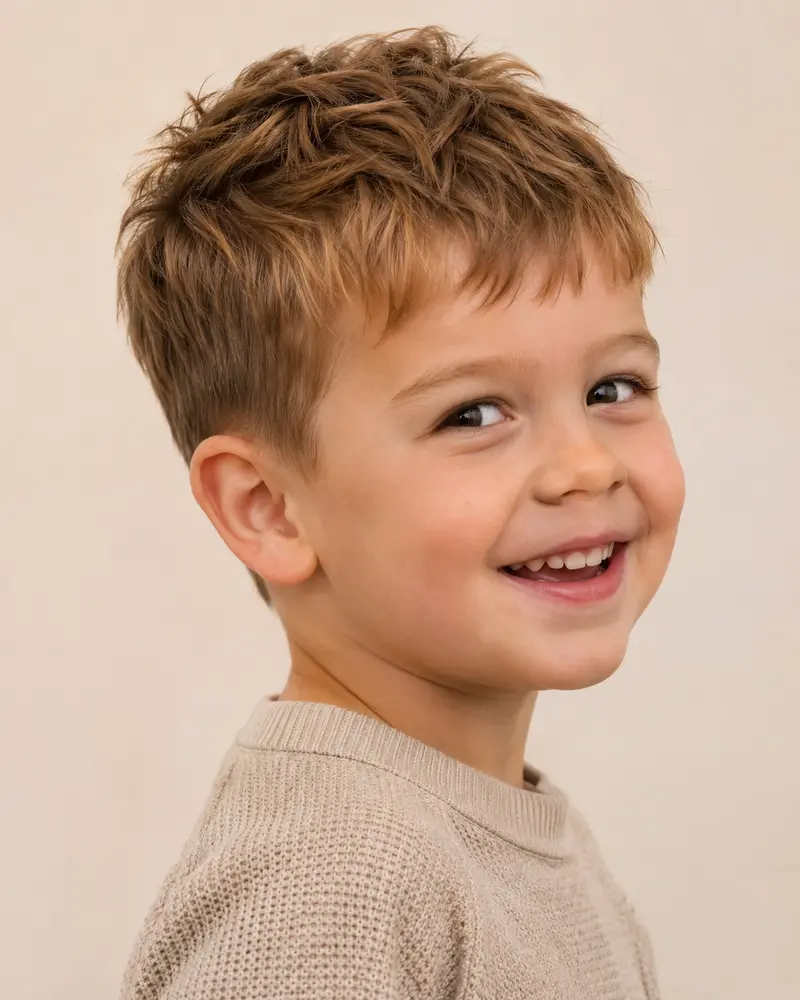
A textured crop is short, practical and forgiving after naps, baths
and active play. The top is cut in small, varied lengths rather than
lying perfectly flat. A light fringe can be left across the forehead
without hanging into the eyes.
This is a useful choice for toddlers whose hair tends to stick up in
different directions. The texture makes those natural changes look
intentional rather than untidy.
Best for: Straight, thick or slightly wavy
hair
Upkeep: Minimal; finger-comb after washing
3. Soft crew cut
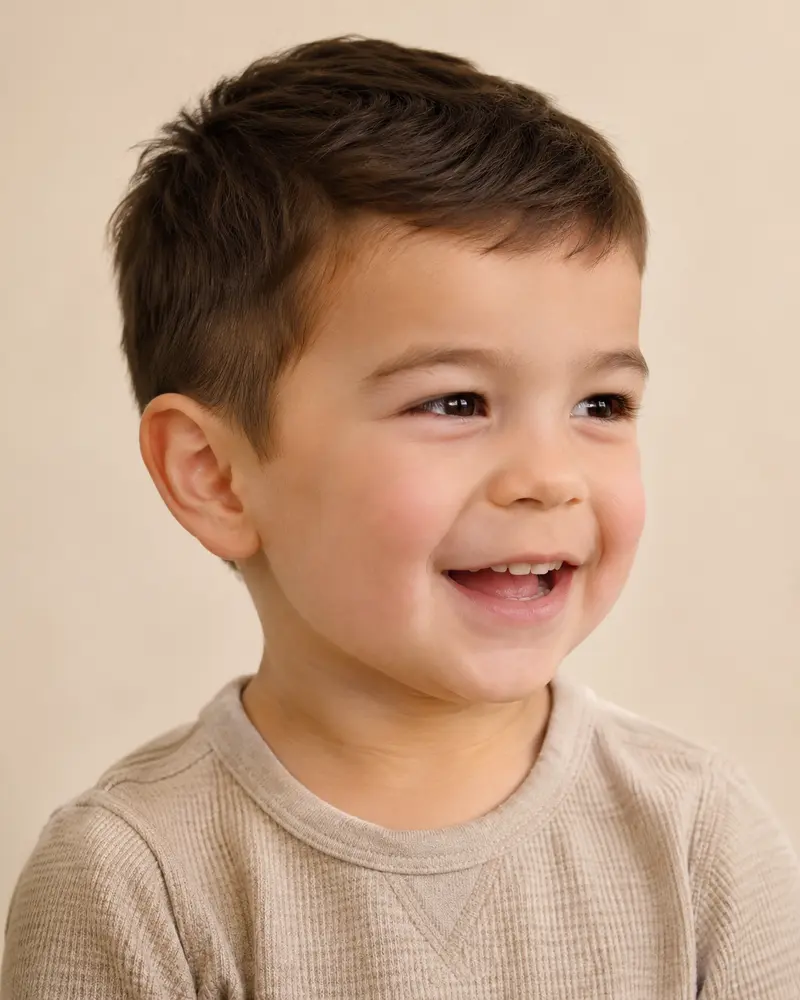
The crew cut is short at the back and sides with a little extra
length toward the front. Unlike an extremely close buzz cut, a
toddler-friendly crew cut retains softness and shape around the
head.
It is easy to wash and dries quickly, making it practical for warm
weather or children who dislike having their hair brushed. Ask the
barber to keep the hairline natural rather than creating a severe,
sharply edged outline.
Best for: Most straight and moderately thick
hair
Upkeep: A trim every 4–6 weeks if you want to retain
the short shape
4. Gentle taper
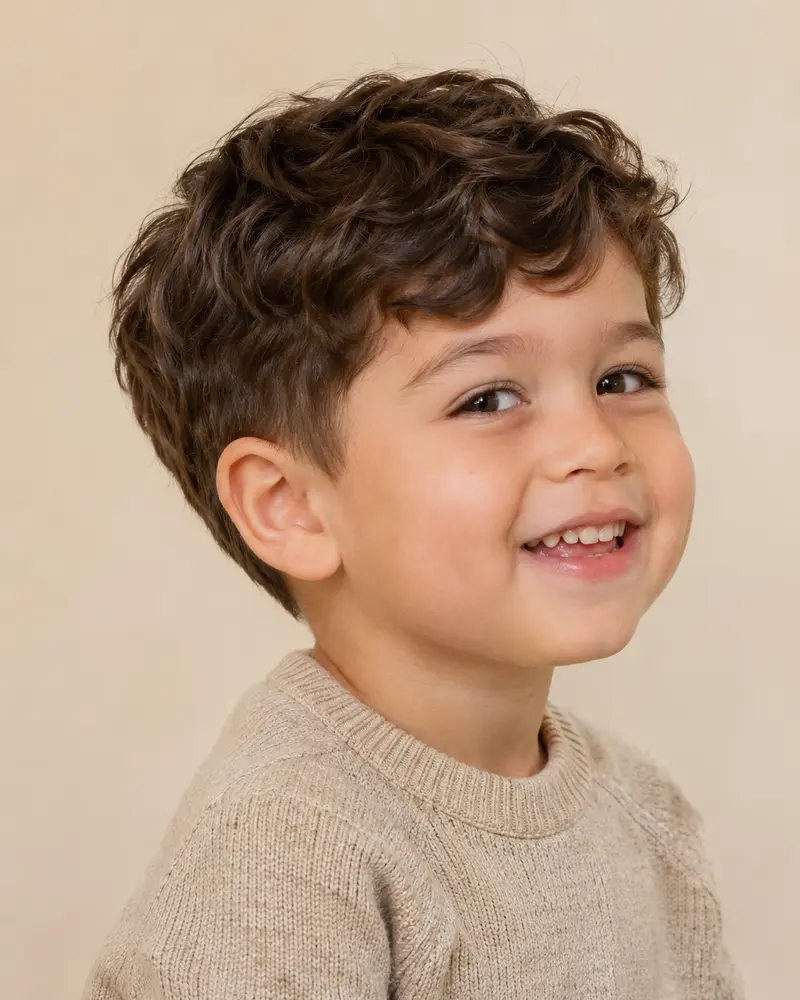
A taper gradually shortens the hair around the ears and neckline
without exposing much scalp. The top can remain short or medium length,
depending on your preference.
This offers the clean appearance of a fade but is less dramatic and
usually grows out more smoothly. It is also a sensible first step if you
are unsure whether a close clipper cut will suit your toddler.
Best for: Straight, wavy or curly hair
Upkeep: Moderate; the neckline may need tidying between
full cuts
5. Side-swept top
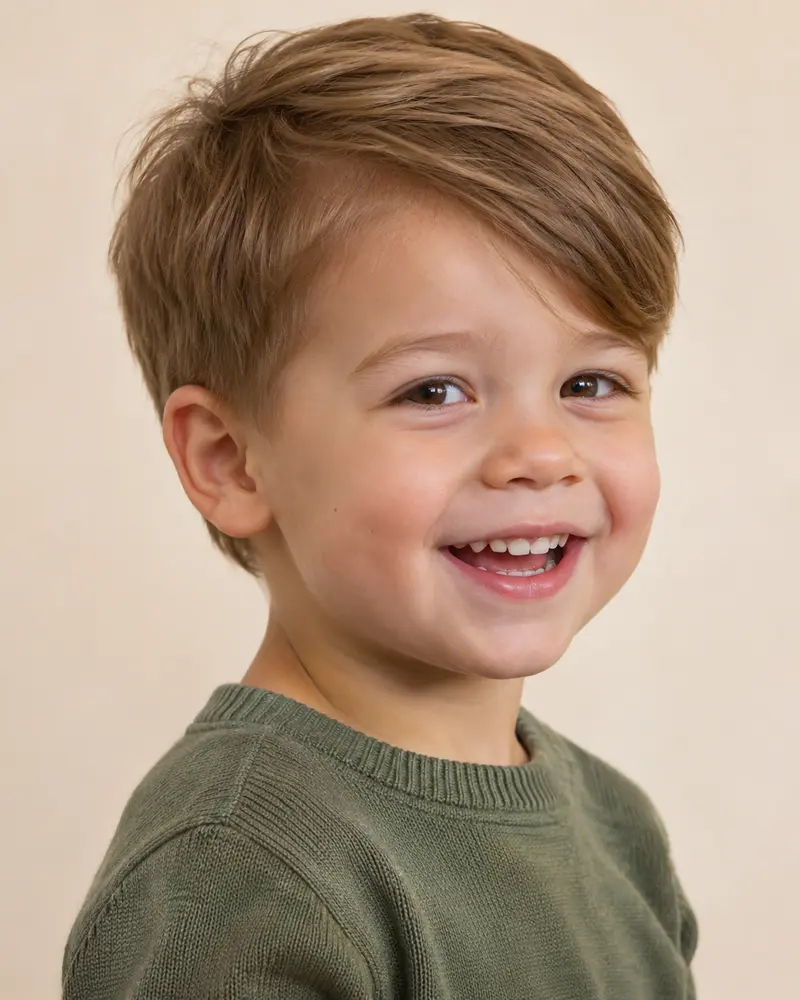
For hair that naturally falls to one side, work with the growth
pattern instead of fighting it. A longer top can be brushed sideways
while the sides are kept comfortably short with scissors or a soft
taper.
The style looks polished for family photos or special occasions, but
it can also be left loose on ordinary days. Avoid a hard shaved part,
which requires frequent maintenance and can make the style feel more
formal than necessary.
Best for: Fine, straight or gently wavy hair
Upkeep: Occasional brushing; no product is usually
needed
6. Curly crop
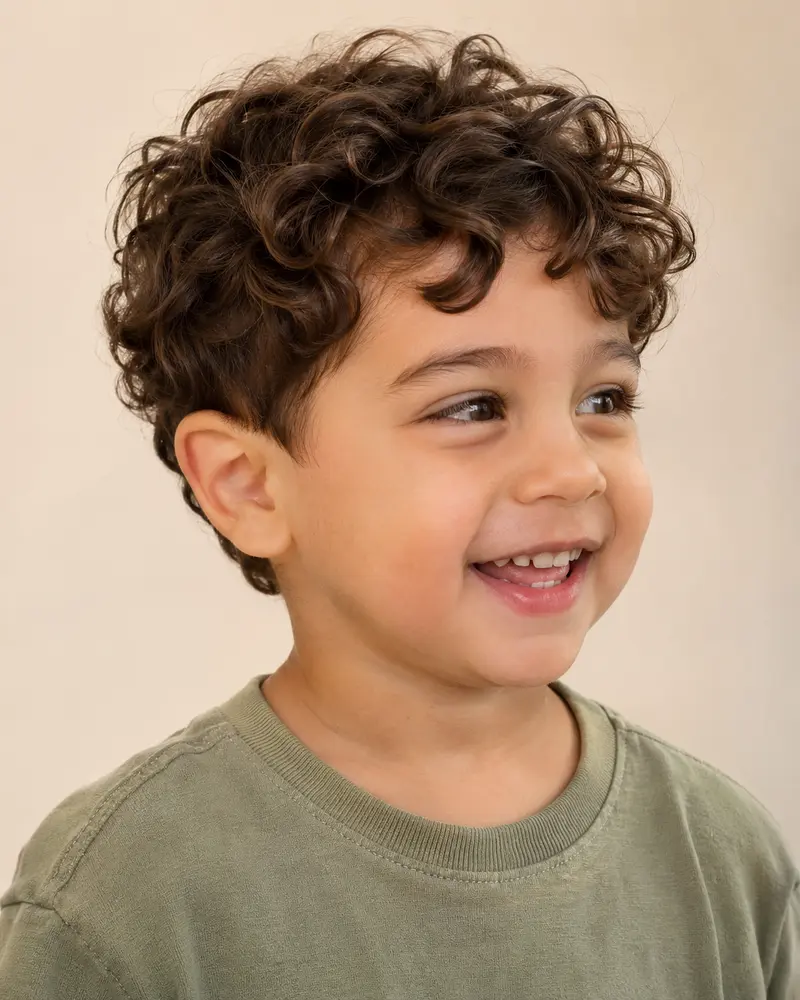
A curly crop keeps enough length on top for curls to form while
gently reducing bulk at the sides and back. It is one of the most
practical toddler haircuts for curly hair because it respects the curl
pattern rather than trying to flatten it.
Ask the stylist to assess the hair dry or only slightly damp, since
curls can look much shorter after drying. Cutting curl by curl may help
preserve a balanced shape, particularly when the pattern varies around
the head.
Best for: Loose curls and mixed curl patterns
Upkeep: Refresh with water and a small amount of
child-friendly leave-in conditioner if needed
7. Rounded curls
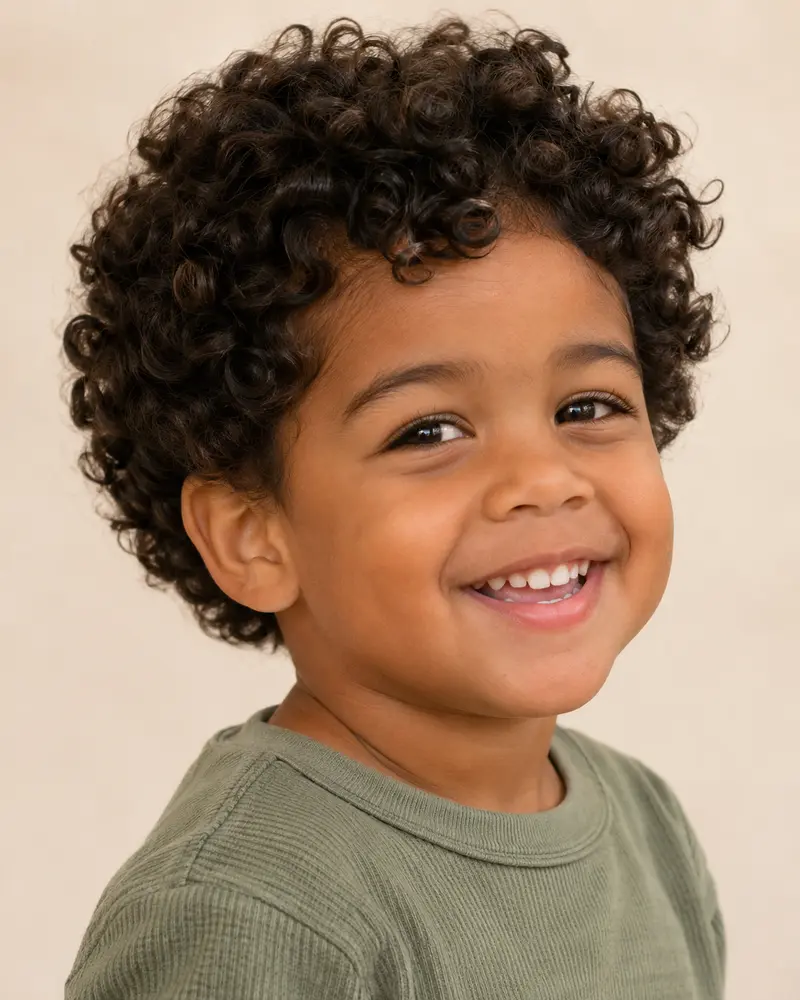
This cut leaves curls full and rounded around the head, with only
enough trimming to remove uneven ends and keep hair away from the eyes.
It celebrates volume instead of reducing it dramatically.
Rounded curls can be particularly charming on toddlers, but the shape
depends on moisture and gentle detangling. Use fingers or a wide-tooth
comb on damp hair and avoid brushing dry curls, which can separate the
pattern and create frizz.
Best for: Medium to tight curls
Upkeep: Less frequent cutting, with regular gentle
conditioning
8. Curly top with tapered
sides
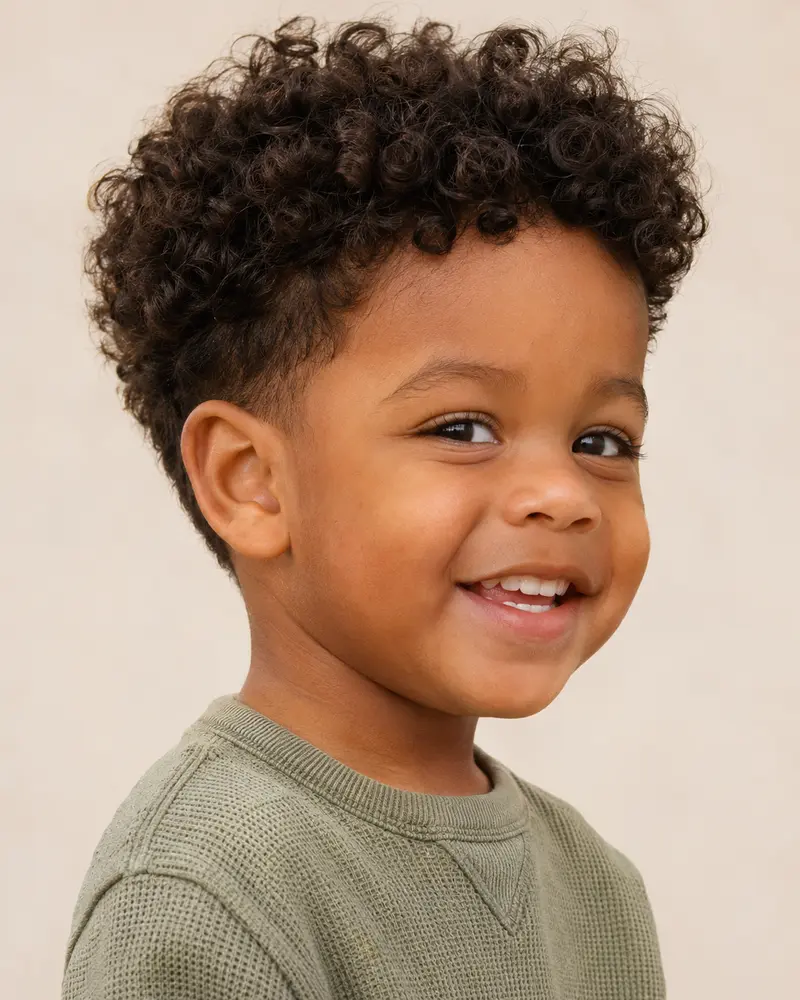
For parents who want a tidier outline without losing curls, keep the
top noticeably longer and taper the area around the ears and neckline.
The contrast gives the haircut shape while leaving the most expressive
part of the hair intact.
The taper does not have to be extremely short. A subtle version is
often easier for toddlers who are sensitive to clippers and for families
who prefer longer gaps between appointments.
Best for: Curly or coily hair with natural
volume
Upkeep: Shape the sides every 5–8 weeks
9. Mini Afro
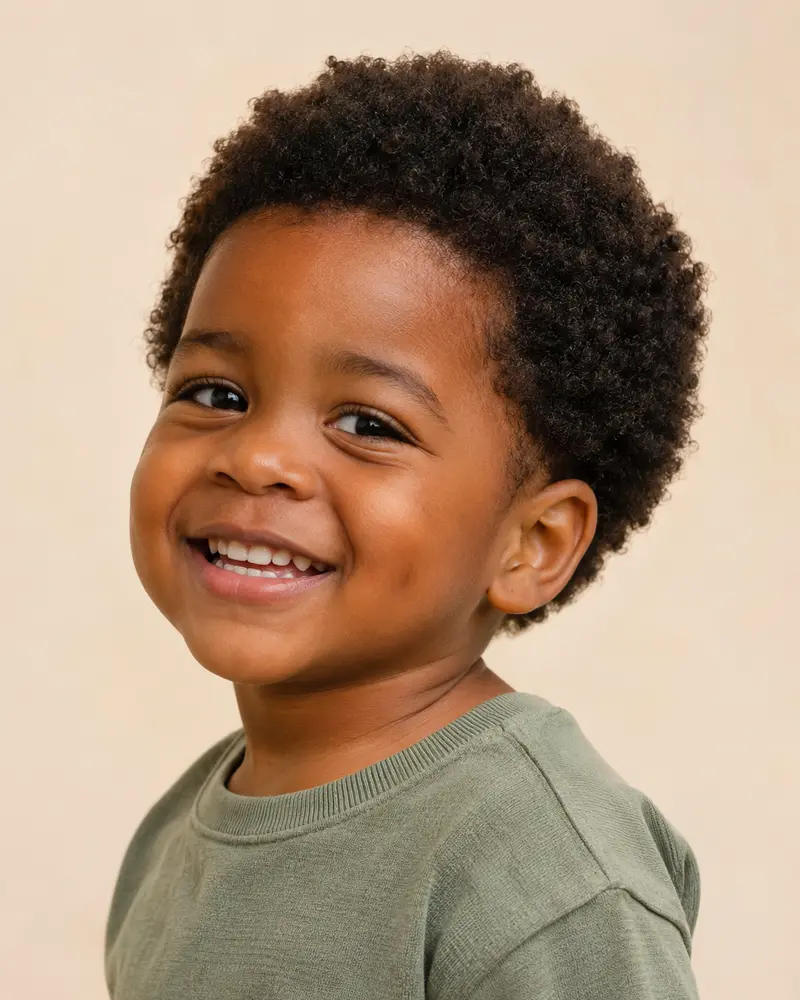
A mini Afro keeps coily hair at a short, even length while preserving
its natural fullness. The outline should appear balanced rather than
sharply sculpted, and the hairline should not be pushed back to create
an artificial edge.
Moisture matters more than daily styling. A simple wash routine,
gentle detangling and a suitable leave-in product can help the hair
remain soft and manageable.
Best for: Coily and tightly curled hair
Upkeep: Regular moisture care; reshaping as the outline
becomes uneven
10. Short Afro taper
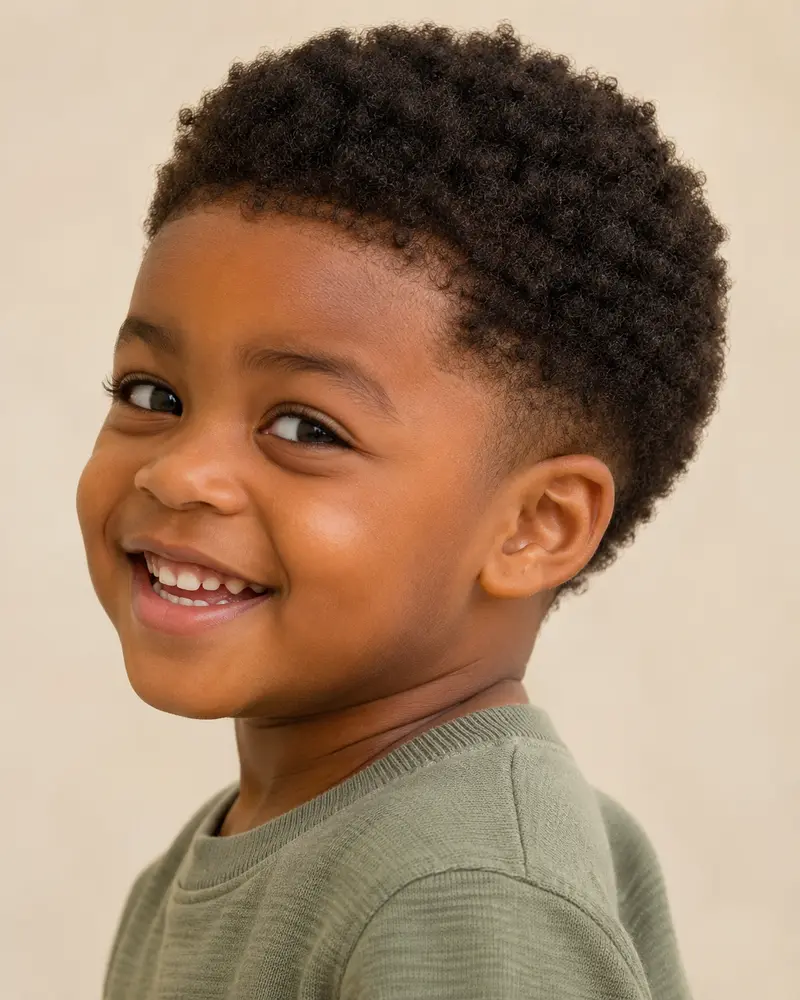
This variation combines a compact Afro on top with slightly shorter
sides and a clean but soft neckline. It can reduce bulk while retaining
the child’s natural texture.
Be clear that you want a toddler-appropriate taper rather than a
high, close fade. The softer transition needs less frequent barbering
and reduces the contrast as the cut grows.
Best for: Dense coily hair
Upkeep: Moderate, depending on how defined you want the
taper to remain
11. Shaggy layered cut

Not every toddler needs a short haircut. A shaggy layered cut works
well when you want to keep some length but prevent the hair from looking
heavy or falling constantly into the eyes.
Light layers add movement around the sides and back. Ask for
conservative trimming around the fringe and ears so the finished style
remains soft rather than looking overly shaped.
Best for: Medium-length straight or wavy hair
Upkeep: Low; trim when the fringe interferes with
vision or the ends become uneven
12. Surfer-style waves
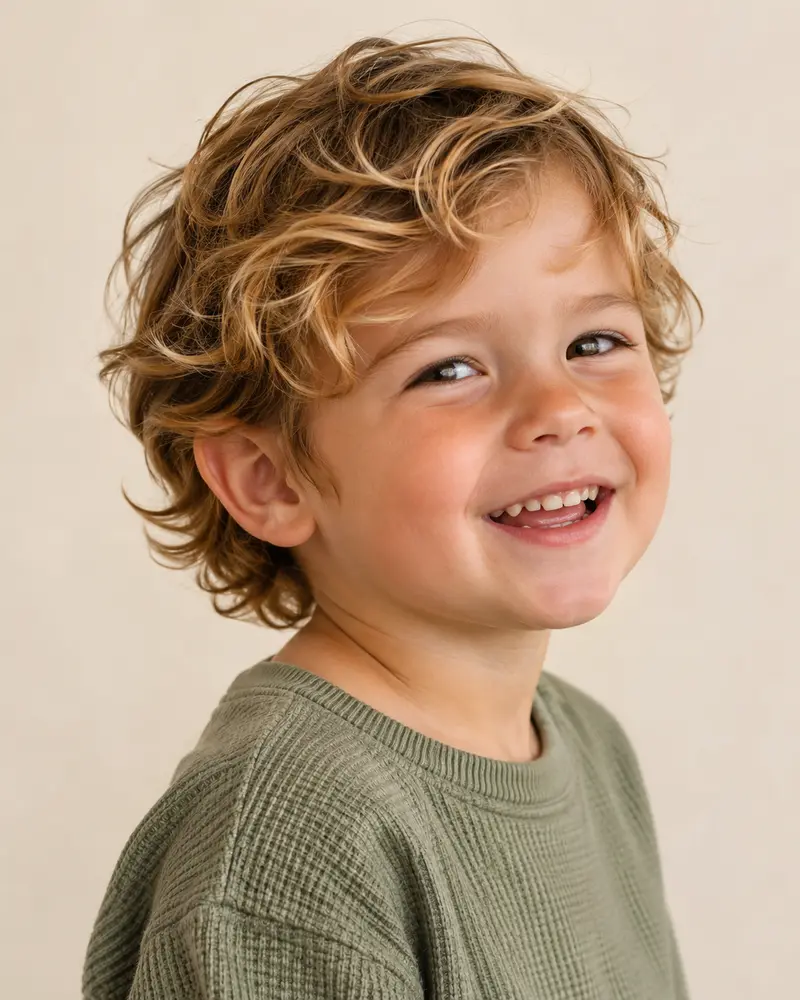
Toddlers with natural waves can wear a slightly longer cut around the
top and back, with enough shaping to prevent it from becoming bulky near
the ears. The result is relaxed and works best when allowed to air-dry
naturally.
This is not a precise, product-heavy hairstyle. Its appeal comes from
movement, so avoid asking the barber to thin the hair aggressively. Too
much thinning can make waves look uneven as they grow.
Best for: Naturally wavy, medium-density hair
Upkeep: Low to moderate; occasional detangling and
conditioning
13. Long top with short sides
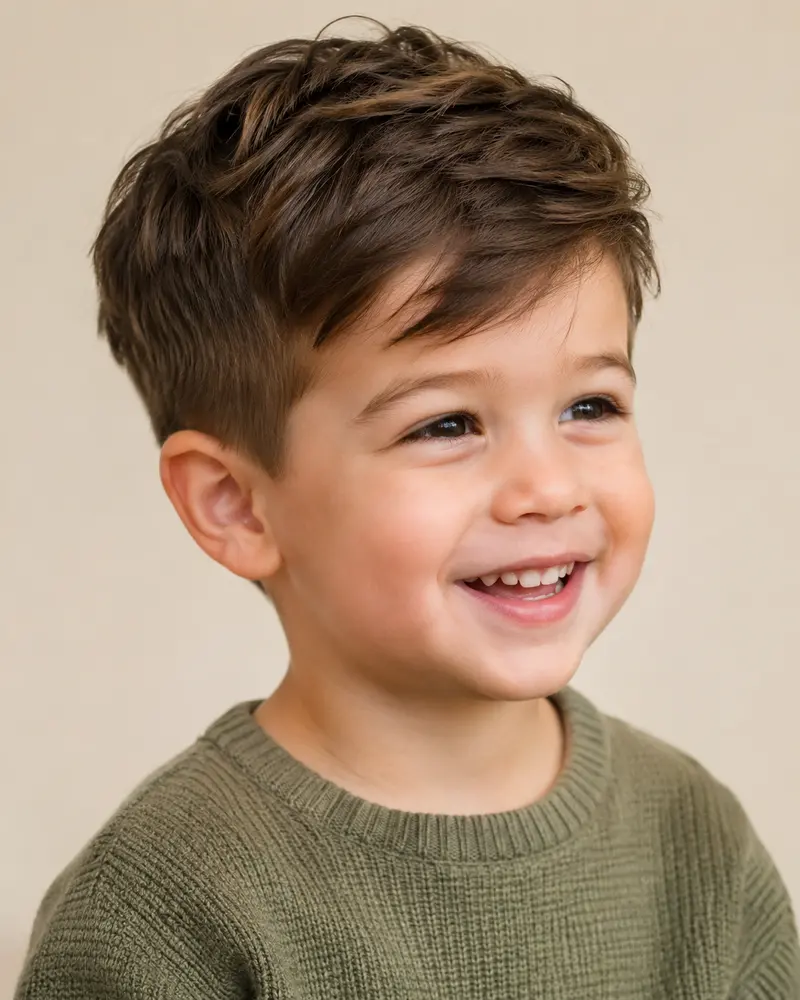
This cut leaves styling flexibility on top while removing weight
around the sides. The longer section can fall forward, sweep sideways or
be gently pushed back for an occasion.
For a toddler, keep the difference between the top and sides
moderate. A dramatic undercut may require frequent appointments and can
be difficult to reshape when you decide to grow it out.
Best for: Thick straight or wavy hair
Upkeep: Brush or finger-style the top; trim before it
reaches the eyes
14. Caesar-style fringe
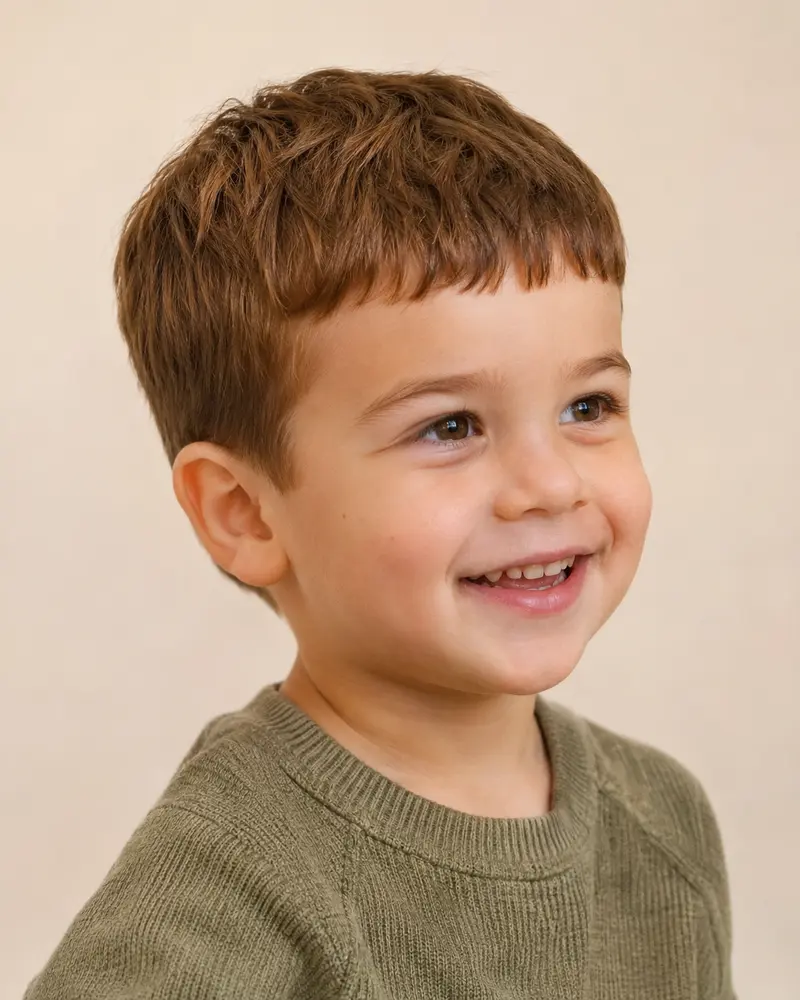
The Caesar is a short, even cut with a small fringe brushed forward.
It is practical for children whose hair naturally grows toward the
forehead and can help disguise cowlicks or an uneven front hairline.
Keep the fringe soft and slightly textured. A blunt, perfectly
straight line can look severe and will show every small change as the
hair grows.
Best for: Straight or gently wavy hair with forward
growth
Upkeep: Low, apart from occasional fringe trimming
15. Even-length scissor cut

If clippers are likely to upset your child, an all-over scissor cut
is a calm, versatile alternative. The barber removes excess length and
creates a balanced shape without making any area dramatically
shorter.
It is also a good first haircut when you want your toddler to remain
recognizable after the appointment. The result is simply a tidier
version of the hair they already have.
Best for: Any hair type when only light shaping is
needed
Upkeep: Usually 8–12 weeks, depending on length and
growth
Quick Comparison:
Which Cut Fits Your Routine?
| If you want… | Consider… | Daily effort |
|---|---|---|
| The easiest wash-and-go option | Soft crew cut or textured crop | Very low |
| A style that grows out gently | Classic short back and sides or scissor cut | Low |
| To preserve natural curls | Curly crop or rounded curls | Low to moderate |
| Less bulk around coily hair | Mini Afro or short Afro taper | Moderate moisture care |
| To keep some length | Shaggy layers or surfer-style waves | Moderate |
| A neat look without a close fade | Gentle taper or side-swept top | Low |
| A clipper-free first haircut | Even-length scissor cut | Very low |
How to Choose a
Haircut for Your Toddler
Photos are useful, but the child in the reference image may have a
different growth pattern, density or curl type. Before choosing a style,
look at how your toddler’s hair behaves on an ordinary day.
Follow the natural texture
Hair that forms curls needs sufficient length to show them. Fine
straight hair may sit better in a crop or side-swept cut, while dense
hair can benefit from careful layering or reduced bulk around the sides.
A good stylist adapts the idea instead of copying the picture
exactly.
Consider sensory comfort
Some toddlers dislike hair touching their ears, forehead or neck.
Others become distressed by clipper noise, spray bottles or loose hair
on their skin. A technically stylish haircut will not feel successful if
the process or finished length is uncomfortable for your child.
If your toddler is sensitive to clippers, request scissors only, ask
whether the barber can use quieter equipment or choose a simple trim
that can be completed quickly.
Be honest about maintenance
Styles with tight fades, hard parts and sharply defined hairlines
look crisp immediately after an appointment but lose that precision
quickly. If you prefer appointments every two months rather than every
few weeks, choose soft blending and a natural outline.
Toddlers rarely need styling wax, pomade or hairspray. A haircut that
looks good with water, a comb and perhaps a small amount of gentle
leave-in conditioner is usually the more practical choice.
What to Tell the Barber
“Short but not too short” means something different to every person.
A clearer conversation can prevent an unexpected result.
Bring two or three photos showing the same haircut from the front,
side and back. Then explain:
- Whether clippers are acceptable or you prefer scissors
- How much length you want to keep on top and around the fringe
- Whether the ears and neckline should be fully exposed
- Which direction the hair naturally falls
- How often you expect to return for another cut
- Whether your child dislikes noise, touch or having their head held
still
You can also ask the barber to begin conservatively. More hair can be
removed after you see the basic shape, but an overly short cut cannot be
reversed.
Making a First Haircut
Easier
There is no universal age for a first haircut. Some children need one
during their first year, while others keep their baby hair well into
toddlerhood. Length, comfort and family preference are more useful
guides than the calendar. If you want to check your child’s age in
months before planning a milestone, the Baby Age
Calculator can help.
Choose a time when your toddler is rested and has eaten. Avoid
scheduling the appointment close to nap time or at the end of a busy
day. Before visiting, you might let your child watch you comb your hair,
read a simple haircut story or briefly visit the barbershop without
having a service.
During the appointment:
- Let your toddler sit on your lap if the shop permits it.
- Bring a familiar toy, book or quiet video for distraction.
- Use a cape only if your child tolerates it; a spare shirt may be
easier. - Ask the barber to explain or show tools before switching them
on. - Keep your reaction relaxed if your child moves or cries.
- Be willing to stop and return another day if distress
continues.
Expecting a toddler to remain completely still for a precise,
adult-style cut is unrealistic. A patient barber can often complete the
important areas in short stages, but safety should always take priority
over symmetry.
Simple Care Between Haircuts
Most toddler hairstyles need less intervention than parents expect.
Wash according to the child’s hair type and activity level rather than
automatically shampooing every day. Use a gentle shampoo, rinse
thoroughly and detangle without pulling.
For straight or fine hair, a soft brush or wide-tooth comb may be
enough. Wavy, curly and coily hair generally benefits from detangling
while damp and from products that provide slip and moisture. Introduce
one product at a time, use only a small amount and stop if it irritates
the scalp.
Avoid trimming around a moving toddler’s eyes or ears at home. If the
fringe becomes bothersome before the next full appointment, arrange a
quick professional tidy-up or wait until you have another adult
available to help keep the child calm and safely positioned.
The Best Cut
Is the One That Works for Your Child
A toddler boy haircut does not need an elaborate fade or a daily
styling routine to look good. Natural texture, a comfortable length and
a soft shape usually create the most wearable result. Start
conservatively, give the barber specific guidance and judge the haircut
by how comfortably it fits everyday life—not only by how it looks in the
chair.
Your toddler’s tolerance may change from one appointment to the next,
and so may their hair. Treat each haircut as an adjustment rather than a
permanent decision. With a patient stylist and realistic expectations,
you can find a cut that feels easy for your child and manageable for
you.
This article provides general grooming information. Stop the
haircut if your child cannot remain safely positioned around scissors or
clippers, and seek medical advice for persistent scalp irritation,
sores, unusual hair loss or signs of infection.
