




You may find out a baby’s sex as early as 10 weeks through cell-free DNA screening, often called NIPT. If you wait for an ultrasound, the usual opportunity is the anatomy scan at 18 to 22 weeks, provided the baby is positioned clearly. CVS or amniocentesis can also identify sex chromosomes, but these diagnostic procedures are performed for medical reasons, not simply to satisfy curiosity. The right timing depends on the test and what you want to know.
Key Takeaways
- NIPT may report fetal sex from 10 weeks, but it is a screening test rather than a diagnosis.
- The anatomy ultrasound, usually performed between 18 and 22 weeks, is the most common time parents learn.
- An ultrasound view is not guaranteed; the baby’s position and image quality matter.
- CVS and amniocentesis can identify sex chromosomes, but they are invasive diagnostic tests offered for medical reasons.
- At-home early sex tests are not the same as clinician-ordered prenatal screening.
First, a Quick Note About “Gender” and “Sex”
Parents often ask when they can find out their baby’s gender. Prenatal tests, however, provide information about fetal sex, not a child’s future gender identity.
A blood or diagnostic test looks at sex chromosomes, while an ultrasound may show external genital anatomy. Those pieces of information usually align, but they aren’t exactly the same. This guide uses the familiar phrase “find out the gender” while explaining what each method can actually tell you.
Your Options at a Glance
| Method | When it may be available | What it examines | What to keep in mind |
|---|---|---|---|
| Preimplantation genetic testing (with IVF) | Before embryo transfer | Chromosomes in sampled embryo cells | Only applies to some IVF cycles; clinic disclosure policies vary |
| NIPT or cell-free DNA screening | From 10 weeks | Placental DNA fragments in the pregnant person’s blood | A screening result, not a diagnosis |
| Chorionic villus sampling (CVS) | 10 to 13 weeks | Placental tissue | Diagnostic and invasive; performed for a medical indication |
| Ultrasound | Most often 18 to 22 weeks | Visible fetal anatomy | Depends on position, gestational age and image quality |
| Amniocentesis | From 15 weeks | Fetal cells in amniotic fluid | Diagnostic and invasive; performed for a medical indication |
Pregnancy weeks are counted from the first day of the last menstrual period, not from conception. If you are unsure how far along you are, a due date calculator can give you a planning estimate. Use the due date your prenatal clinician confirms when scheduling tests and appointments.
The Earliest Common Option: NIPT at 10 Weeks
For most pregnancies conceived without IVF and preimplantation testing, NIPT is the earliest routine way parents may learn fetal sex. It can be performed from 10 weeks with a blood sample from the pregnant person.
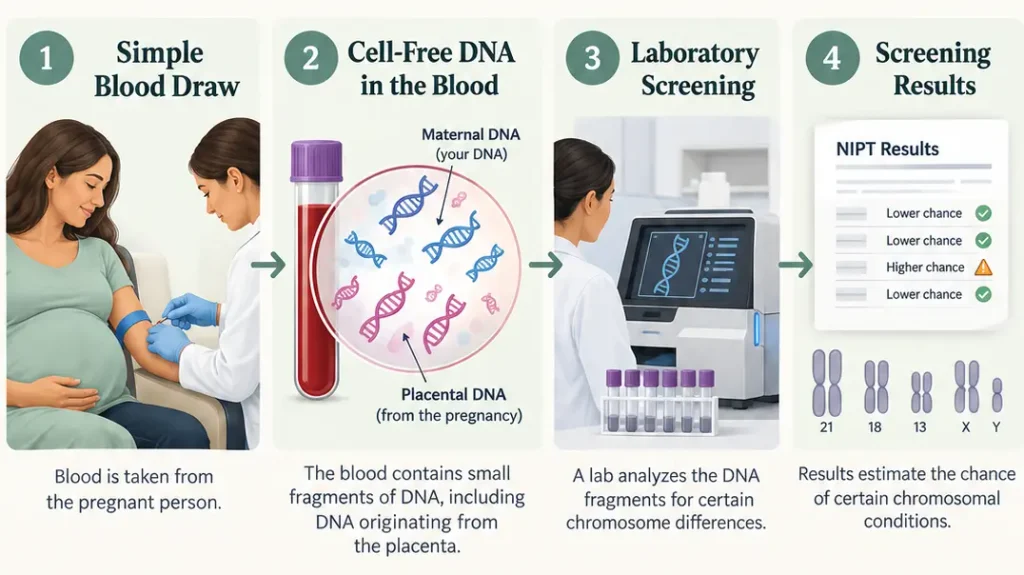
The test examines small fragments of cell-free DNA released mainly by the placenta. Its medical purpose is to screen for the chance of certain chromosome conditions. Depending on the laboratory and the screening selected, the report may also include information about the X and Y chromosomes. A Y-chromosome signal usually indicates a male fetus; the absence of one usually indicates a female fetus.
The important word is screening. NIPT does not directly examine every cell in the fetus, and it cannot guarantee a result. The American College of Obstetricians and Gynecologists explains that cell-free DNA screening can begin at 10 weeks, but a positive screening result should be discussed with a clinician and may need diagnostic confirmation.
Sometimes the laboratory cannot issue a result. This may happen when there is not enough fetal fraction. The proportion of cell-free DNA associated with the pregnancy in the sample. Testing very early, individual biological factors and sample issues can all play a role. A “no result” or “no call” is not the same as a female result and should not be interpreted on your own.
Results can also be more complicated in a twin pregnancy, after a vanished twin, or when a sex chromosome difference is detected. If the report is unexpected or conflicts with a later ultrasound, ask your prenatal clinician or a genetic counselor to explain what the test measured and whether follow-up is appropriate.
How long do NIPT results take?
Turnaround varies by laboratory and practice. Many families receive a report within roughly one to two weeks, but collection day, shipping, weekends, repeat testing, and clinic review can change that timing. Ask your clinic whether results will appear automatically in a patient portal. Especially if you want the sex information kept secret for a reveal or placed in an envelope.
The Most Common Time: The 18- to 22-Week Ultrasound
Many parents find out during the second-trimester anatomy scan. This detailed ultrasound is generally scheduled between 18 and 22 weeks to look at fetal growth and structures such as the brain, heart, spine, limbs, and placenta. Identifying external genital anatomy may be possible, but it is a small part of a medically important exam.
The sonographer needs a clear view. A baby with crossed legs, a turned body, or a position deep in the pelvis may make that difficult. Body tissue, scar tissue, the amount of amniotic fluid, gestational age, and the imaging equipment can also affect what can be seen. Even an experienced sonographer cannot responsibly promise an answer at every scan.
Fetal sex may be visible if the fetus is in a good position. If the view is unclear, the sonographer may say so rather than guess. Your care team usually will not order another medical ultrasound solely to determine sex, although a repeat scan may be recommended when required anatomy could not be fully assessed.
Can you find out at a 12-week ultrasound?
You may hear predictions based on an early ultrasound, sometimes called “nub theory.” At about 12 weeks, however, external anatomy is still developing and a confident view can be difficult to obtain. Don’t treat an early guess as a confirmed result.
The first-trimester ultrasound also has more important jobs, such as confirming location, dating the pregnancy, checking the heartbeat when appropriate and assessing the number of fetuses. If knowing early matters to you, ask about clinician-ordered NIPT rather than relying on a 12-week image or a keepsake scan.
CVS and Amniocentesis Can Give Diagnostic Information
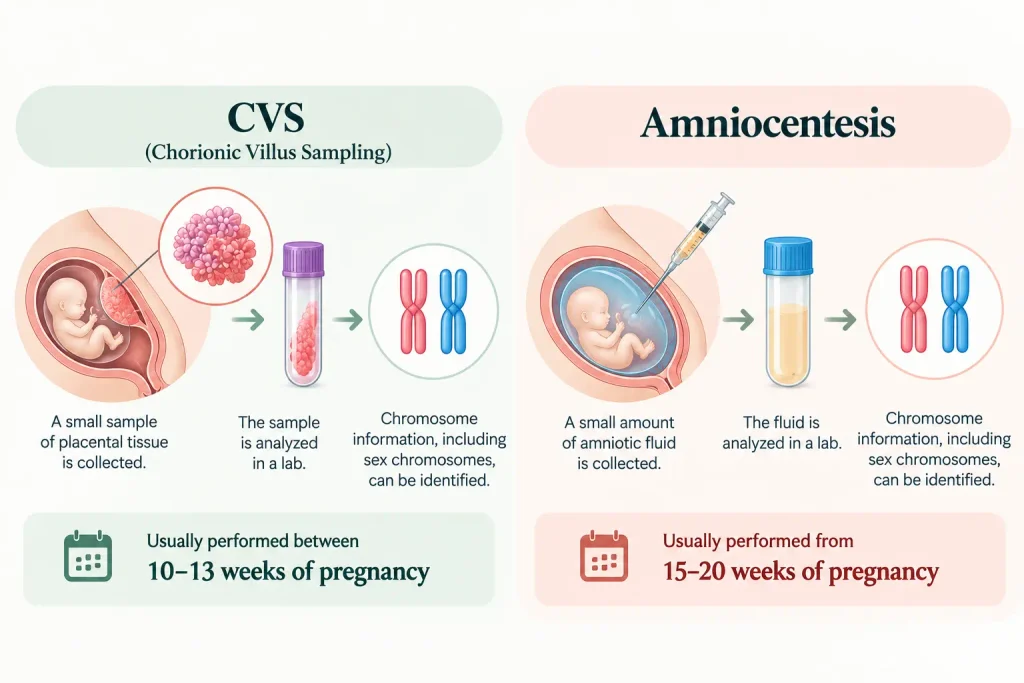
CVS and amniocentesis analyze genetic material and can identify sex chromosomes as part of the results. They offer diagnostic information, but they are not casual gender-prediction tests.
Chorionic villus sampling (CVS) is generally performed between 10 and 13 weeks. A clinician takes a small sample of placental tissue through the cervix or abdomen, depending on placental location and other clinical factors.
Amniocentesis is generally performed from 15 weeks. A clinician uses a thin needle, guided by ultrasound, to remove a small amount of amniotic fluid containing fetal cells.
Both procedures are used when diagnostic chromosome or genetic information could affect pregnancy care—for example, after an abnormal screening result, a concerning ultrasound finding, a known familial condition or an individualized discussion of risk. Because they are invasive and carry a small risk of complications, they are not recommended simply to learn whether a baby is male or female. ACOG’s prenatal genetic diagnostic testing guidance can help you prepare questions for your obstetric clinician or genetic counselor.
If you are offered one of these tests, the decision deserves a broader conversation than the sex result: what condition is being investigated, what the procedure can and cannot detect, possible complications, when results will arrive and what you might do with the information.
What If You Are Using IVF?
When embryos created through IVF undergo preimplantation genetic testing, the laboratory may have chromosome information before an embryo is transferred to the uterus. This can reveal the embryo’s chromosomal sex before pregnancy begins.
Not every IVF cycle includes this testing, and it should not be presented as a simple add-on for finding out early. Different forms of PGT are used for different medical purposes, and testing has technical limitations. Clinics also have their own policies about whether sex information is reported or may influence embryo selection. The American Society for Reproductive Medicine recommends that clinics explain their disclosure policies and ask patients whether they want to receive sex information when it is incidentally available through PGT.
If this applies to you, ask your fertility specialist what type of PGT was performed, what the report means, and whether prenatal screening or diagnostic testing is still recommended after pregnancy is established.
Why a Blood Test and Ultrasound Might Disagree
Conflicting results are uncommon, but they do happen. A mismatch does not automatically tell you which result is correct because the methods look at different things: NIPT evaluates DNA fragments mostly from the placenta, while ultrasound evaluates visible anatomy.
Possible explanations include:
- The ultrasound view was limited or interpreted too early.
- The blood sample contained too little pregnancy-associated DNA for a dependable result.
- A vanished twin contributed DNA early in pregnancy.
- The sample was contaminated, mislabeled or affected by a rare laboratory error.
- The placenta and fetus have different chromosome patterns in some cells.
- A difference of sex development affects chromosomes, hormones or anatomy.
Do not make medical decisions from a conflicting sex result alone. Contact your prenatal clinician, who may review the original reports, arrange a targeted ultrasound, recommend genetic counseling or discuss diagnostic testing based on the complete clinical picture.
Are At-Home Early Gender Blood Tests Reliable?
Direct-to-consumer kits often advertise fetal sex results earlier than a standard anatomy scan, and some accept finger-prick blood samples collected at home. These products are not interchangeable with clinician-ordered NIPT.
Collection technique matters. A tiny amount of male DNA from another person in the environment may contaminate a home sample, while testing too early can leave too little pregnancy-associated DNA to analyze. Company methods, quality controls and policies for inconclusive results also differ.
If you use a home test for fun, treat it as preliminary. Do not use it to make health decisions, and consider waiting for a clinician-ordered screening result or a clear medical ultrasound before buying personalized items that cannot be returned. Urine “gender tests,” baking-soda reactions, heart-rate myths, cravings and belly shape cannot determine fetal sex.
When Should You Find Out?
There is no medically correct time to learn. Some parents want the earliest available result; others prefer the shared moment of an ultrasound, and some wait until birth. Partners may feel differently, too.
Before testing, decide what would make the experience comfortable for you:
- Tell your clinic clearly if you do not want sex information disclosed.
- Ask how results appear in the patient portal so the surprise is not spoiled by a notification.
- If one partner wants to know first, agree on who may receive the report.
- Remember that a result does not need to dictate nursery colors, clothing, toys or a child’s future interests.
- Leave room for uncertainty until a clinician confirms that the result is clear.
If finding out prompts you to start planning, keep the next step useful rather than overwhelming. You might make a short list of names, discuss parental leave or sketch out first-year expenses with the baby budget calculator. There is no need to prepare everything in one weekend.
When to Ask for More Guidance
Routine questions about timing can usually wait for your next prenatal appointment. Contact your care team sooner if a test report shows a high-risk chromosome finding, provides no result, or conflicts with another test. A genetic counselor can translate probabilities into plain language and explain which follow-up options would actually answer your question.
The practical answer is simple: NIPT may tell you from 10 weeks, while ultrasound most often tells you around 18 to 22 weeks. But the experience is not a countdown to a guaranteed reveal. Choose the option that fits your medical care and your comfort with uncertainty—and give the sonographer room to focus on the health information the scan is designed to provide.
