


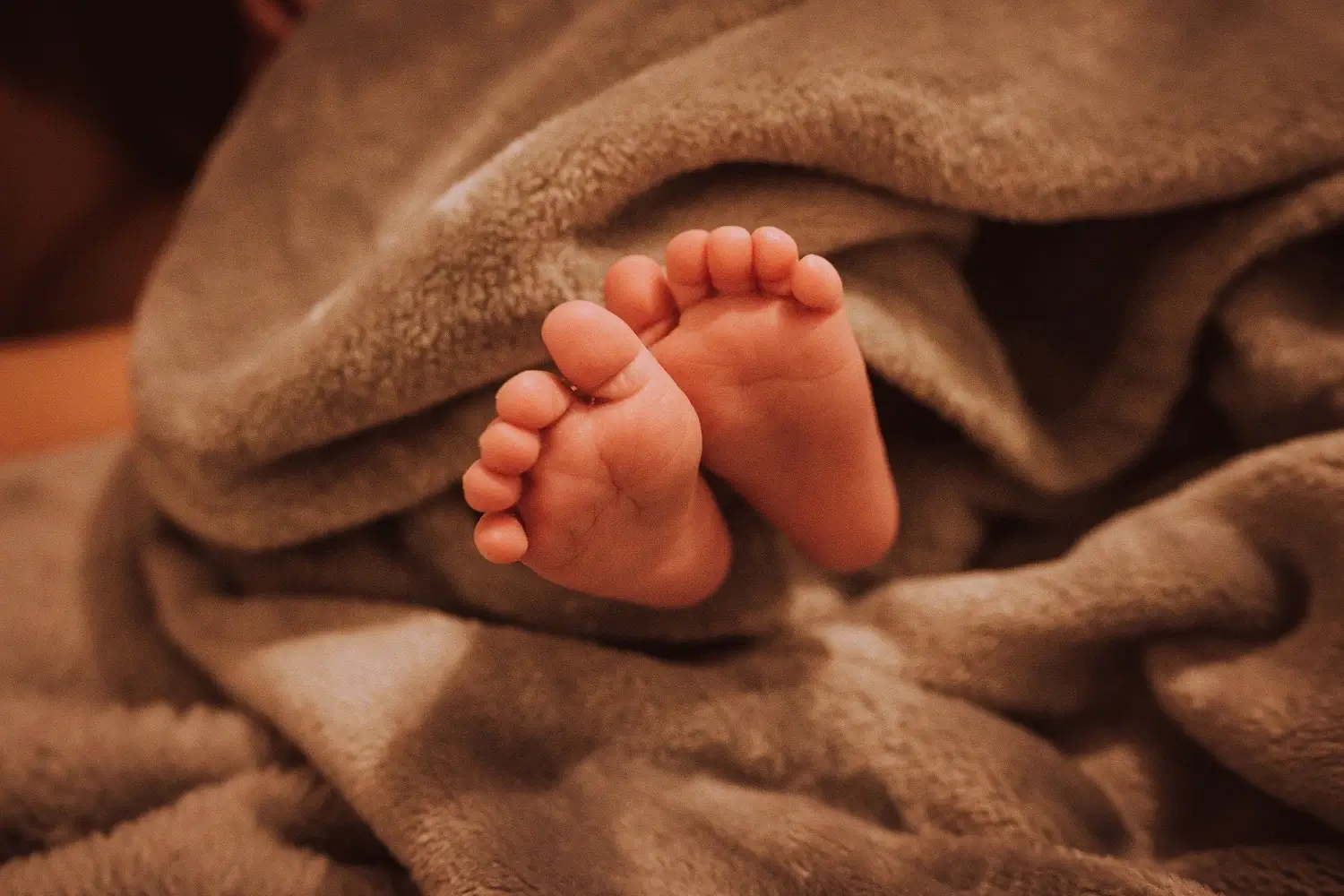

Babies should not sleep with a loose blanket during their first 12 months. For that first year, the safest sleep space is a firm, flat mattress with a fitted sheet and nothing else around the baby. After the first birthday, many healthy children can begin using a small, lightweight blanket, although there is no need to introduce one immediately. A properly fitted sleep sack remains a good option if your child is comfortable in it.
Key Takeaways
- Keep loose blankets out of a baby’s crib or bassinet for the entire first year.
- Rolling, sitting, or pulling to stand does not make a blanket safe before 12 months.
- Use fitted pajamas or a correctly sized wearable blanket when your baby needs another layer.
- After 12 months, start with a small, lightweight blanket without ties, loose trim, filling, or added weight.
- Your child does not have to stop using a sleep sack simply because they have turned one.
Why Babies Under 12 Months Should Sleep Without a Blanket
A blanket feels like an ordinary part of sleep to an adult, but an infant cannot manage loose bedding in the same way. Fabric can bunch near the face, trap a baby against the side of the sleep space, or make it harder to breathe. A thick blanket can also contribute to overheating.
That is why the safe-sleep setup is intentionally plain: place your baby on their back on a firm, flat sleep surface covered by a fitted sheet. Keep blankets, pillows, toys, bumper pads, quilts, and other soft objects outside the crib or bassinet. This applies to naps as well as nighttime sleep. The American Academy of Pediatrics’ safe-sleep guidance recommends maintaining this clear sleep space throughout the baby’s first year.
The rule does not change because your baby can roll over, lift their head, sit independently, or pull to stand. Those are encouraging developmental steps, but they do not prove that a baby can consistently free their face from loose fabric while asleep.
A Blanket Is Not Safer When It Is Tucked In
Parents sometimes try to make a regular blanket safer by tucking it under the mattress, placing it only over the baby’s legs, or securing it tightly around the lower body. The problem is that babies move. A blanket that looks secure at bedtime can loosen, shift, or bunch during the night.
The same concern applies to a blanket draped over the side of a crib. Once a baby can reach, pull, or stand, nearby fabric may end up inside the sleep space. Keep decorative blankets on a chair, shelf, or other place your baby cannot reach from the crib.
A blanket is fine for supervised cuddling, floor play, or keeping warm while an awake baby is in your arms. Remove it before the baby falls asleep or is placed in the crib, bassinet, portable crib, or play yard.
How to Keep Your Baby Warm Without Loose Bedding?
Cold hands can worry parents, but a baby’s hands and feet often feel cooler than their chest or back. Check the torso or the back of the neck when deciding whether your baby needs another layer. Sweating, damp hair, flushed skin, or a hot chest may mean the baby is too warm.
For sleep, choose clothing that provides warmth without adding loose fabric around the face:
- A fitted one-piece sleeper
- Season-appropriate pajamas
- A correctly sized wearable blanket or sleep sack
- An additional clothing layer when the room is cooler
A common starting point is to dress a baby in one more light layer than an adult would wear comfortably in the same room. Use your baby’s temperature and comfort as a guide rather than piling on layers automatically.
Choose a Sleep Sack That Fits Properly
A sleep sack should fit closely enough around the neck and arm openings that your baby’s head cannot slip inside. It should still leave room for the hips and legs to move naturally. Follow the manufacturer’s height and weight range instead of buying a much larger size for your baby to grow into.
Avoid wearable products that are torn, excessively loose, or able to ride up over the face. Do not add a regular blanket on top of a sleep sack.
Weighted blankets, weighted swaddles, weighted sleep sacks, and other weighted sleep products should not be used for an infant. The Consumer Product Safety Commission advises against weighted infant sleep products, which can place pressure on a baby’s chest and restrict movement.
Swaddling and Loose Blankets Are Different Questions
Swaddling uses a thin blanket or purpose-made wrap to hold a young baby’s arms close to the body. It is not the same as leaving a loose blanket in the crib, and it is only appropriate for an early stage.
Stop swaddling as soon as your baby shows signs of trying to roll over. A swaddled baby who rolls may have difficulty using their arms to move away from a position that interferes with breathing. Once swaddling ends, switch to ordinary fitted sleepwear or an arms-free sleep sack rather than putting a loose blanket over the baby.
If you are deciding how clothing, feeds, naps, and bedtime fit together, the baby sleep calculator can create a flexible example schedule. Its timing suggestions do not replace safe-sleep practices; the sleep space should remain clear for every nap and night.
What Changes After the First Birthday?
Safe-sleep recommendations for infants cover the first 12 months, when the risks associated with loose bedding are greatest. After that point, many healthy children have the strength and mobility to change position and move fabric away from their face.
The first birthday is a reasonable point to reconsider a blanket, not a deadline for adding one. Some toddlers enjoy the comfort. Others kick it away immediately or sleep happily in a sleep sack for much longer.
Before offering a blanket, consider whether your child:
- Is at least 12 months old
- Moves easily between lying down, sitting, and standing
- Can use both arms freely
- Does not have a medical or developmental condition that affects movement or breathing
- Sleeps in a space that is otherwise safe for their age
If your child was born prematurely or has limited mobility, low muscle tone, a breathing condition, or another medical concern, ask their pediatrician before changing the sleep setup. Age alone may not answer the question for a child with additional needs.
How to Choose a First Blanket?
The best first blanket is uncomplicated. Look for a small, lightweight blanket that your child can move easily. It should be large enough to cover part of the body without being so large that it wraps around the child several times or fills most of the crib.
Avoid:
- Heavy quilts and adult-size comforters
- Weighted blankets
- Electric or heated blankets
- Blankets with long fringe, ribbons, cords, buttons, or loose decorations
- Items with damaged seams or exposed filling
- Layering several blankets together
Marketing terms such as “breathable” do not make a product automatically appropriate for infant sleep. Check the child’s age, the product instructions, its condition, and how easily your child can move it.
Wash a new blanket before use and inspect it regularly for unraveling threads, holes, or loose pieces. If it becomes damaged, remove it until it can be repaired safely or replaced.
Introducing a Blanket Without Disrupting Sleep
There is no special training process. Let your child handle the blanket while awake so it becomes familiar. At bedtime, place it loosely over the lower part of the body rather than near the face. Keep your child’s usual pajamas underneath because the blanket may not stay in place.
If your toddler repeatedly pulls it over their face, becomes tangled, or seems uncomfortable, take it out and try again later. Continuing with a sleep sack is completely reasonable.
Do not be surprised if the blanket ends up at the other end of the crib by morning. Young toddlers move frequently during sleep and are not dependable blanket users. Dress your child for the room temperature so staying warm does not depend on keeping the blanket on all night.
Children around 13 months may also be moving between nap patterns or experiencing changes in bedtime behavior. The 13-month-old sleep schedule can help you separate a routine issue from the simple novelty of a new comfort item.
Does Adding a Blanket Mean It Is Time for a Toddler Bed?
No. Turning one and introducing a small blanket do not automatically mean your child should leave the crib. Sleep bedding and the crib-to-bed transition are separate decisions.
A child who remains within the crib manufacturer’s limits, is not climbing out, and is comfortable may stay in the crib longer. If climbing begins or your child has outgrown the crib, review the manufacturer’s instructions and make the room safe before moving to a bed. Once a child can get out independently, the entire room effectively becomes part of the sleep environment.
Keep the bedtime routine familiar during any sleep-space change. Moving beds, adding a blanket, dropping a nap, and changing the bedtime routine all at once can make it difficult to tell what is helping or causing new resistance.
Common Blanket Mistakes to Avoid
Most blanket problems come from introducing one too early or choosing more bedding than a young child needs.
Adding a blanket because the baby wakes often
Night waking does not necessarily mean a baby is cold. Hunger, development, illness, discomfort, nap timing, and normal sleep cycles may all play a role. Check the room and clothing, but do not add loose bedding to solve waking during the first year. Our sleep regression chart by age can help you consider other common changes without treating them as a diagnosis.
Covering a baby in a stroller or car seat
A blanket should never obstruct the baby’s face or interfere with the harness. Do not place bulky layers between your child and car-seat straps. If you use a light blanket over the secured harness while your baby is awake, supervise closely and remove it if it moves toward the face or your baby becomes warm.
Assuming a blanket helps every toddler sleep
A blanket may become a comforting sleep cue, but it is not a sleep treatment. If your toddler sleeps well without one, there is no reason to add it. A predictable routine and age-appropriate sleep schedule are more useful than introducing extra bedding simply because your child has reached a particular birthday.
