




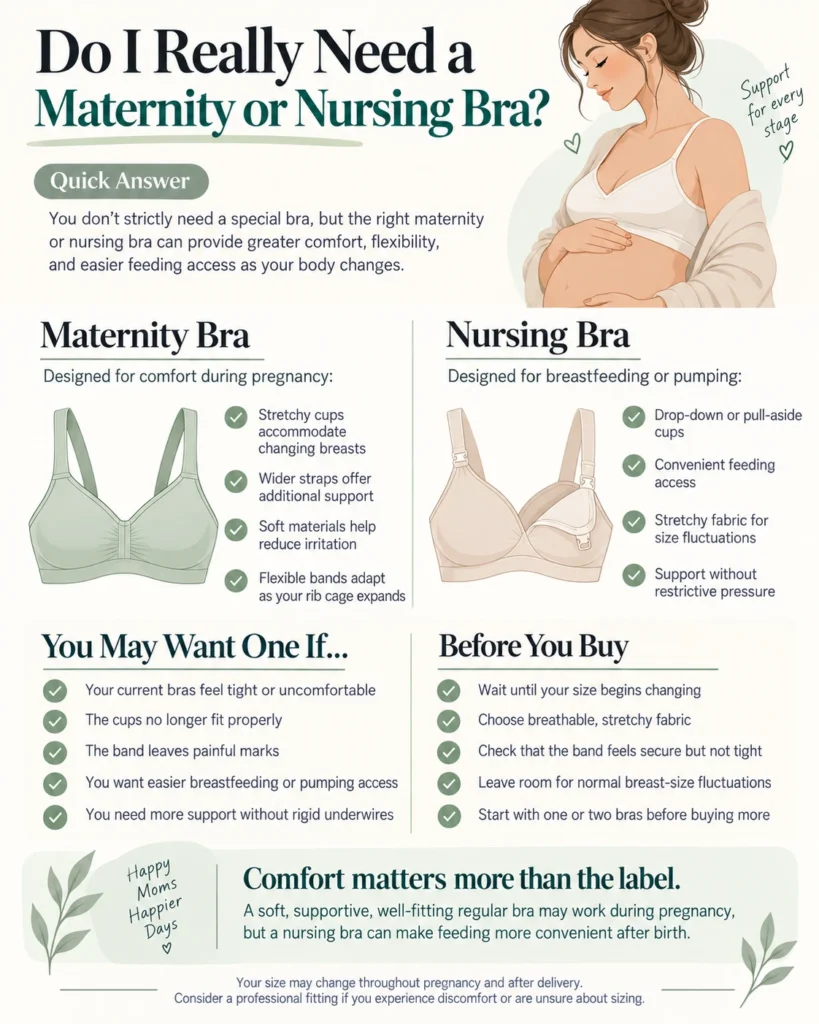
You do not strictly need to buy a bra with the word “maternity” on the tag, but you will almost certainly need to buy new bras during your pregnancy. As your body changes, your regular bras will likely become uncomfortable, tight, and potentially restrictive enough to cause breast health issues.
If you plan to breastfeed or pump, investing in a few nursing bras is highly recommended. While you could technically lift or pull down a regular stretchy bra to feed your baby, nursing bras are specifically engineered with drop-down clips to provide immediate access while still supporting the rest of the breast.
Here is what you need to know about the differences between these bras, how your body dictates your needs, and when to make the switch.
Maternity Bras vs. Nursing Bras: What is the Difference?
While the terms are often used interchangeably, maternity and nursing bras serve slightly different primary functions, though many modern options combine both.
Maternity Bras A maternity bra is designed to support the breast changes that happen during pregnancy. They typically feature:
- Extra rows of hook-and-eye closures in the back to accommodate a widening rib cage.
- Wider straps and a wider band for better weight distribution.
- Soft, stretchy fabric cups (often without underwire) that can adapt as your cup size fluctuates.
Nursing Bras A nursing bra contains all the supportive and stretchy features of a maternity bra, but adds specialized hardware for feeding. They feature:
- Clips or snaps on the shoulder straps that allow the front fabric panel to fold down.
- An inner sling that holds the bra strap in place and supports the breast while the cup is open.
- Room for nursing pads to absorb milk leaks.
Because pregnant bodies change so rapidly, many manufacturers now create hybrid “maternity and nursing bras” so you do not have to buy two entirely separate wardrobes.
Why Your Regular Bras Might Not Work
During pregnancy, it is not just your cup size that increases. As your uterus grows, it pushes your other organs upward. To make room, your rib cage actually expands.
Women often notice their regular bra band feels tight and restrictive long before their cup size changes drastically. Simply using a bra band extender on your pre-pregnancy bras can buy you some time in the first trimester, but it will not solve the issue of changing cup sizes or the need for softer fabrics as your skin becomes more sensitive.
The Risks of Wearing the Wrong Bra Size
Continuing to squeeze into a pre-pregnancy bra with rigid cups and stiff underwires is not just uncomfortable; it can lead to health complications, particularly late in pregnancy and postpartum.
The Office on Women’s Health warns that wearing tight bras or clothing that puts pressure on your breasts can restrict milk flow. When breast tissue is compressed, milk ducts can become blocked. A plugged duct is painful and, if left unresolved, can develop into mastitis—a serious inflammation or infection of the breast tissue that often requires medical treatment.
Because traditional underwires do not flex with your body, they can dig into the lower breast tissue when your breasts are engorged. For this reason, most lactation consultants recommend wire-free styles during late pregnancy and the first few months of breastfeeding.
When is the Best Time to Buy?
Your breasts will change size multiple times between conception and weaning. Buying a massive haul of expensive nursing bras in your first trimester is usually a mistake, as your size will likely change again before the baby arrives.
First Trimester (Weeks 1-13) Focus on comfort. Your breasts may feel tender and swollen. Transition to stretchy, wire-free bralettes or purchase one or two basic maternity bras that have plenty of stretch.
Second Trimester (Weeks 14-27) Your rib cage will likely begin to expand. If your first-trimester bras feel tight around the band, it is time to size up. Look for bras with multiple rows of back closures.
Third Trimester (Weeks 28-40) Around eight months (roughly 32 to 36 weeks), your breast size will stabilize slightly before your milk comes in. This is the ideal time to buy two or three dedicated nursing bras. When trying them on, make sure the bra fits comfortably on the tightest or second-tightest hook. This ensures you have room to loosen the band as your rib cage reaches its maximum expansion right before birth, and then tighten it again as your rib cage settles postpartum.
Postpartum (When Your Milk Comes In) Two to five days after delivery, your breasts will likely become engorged as mature milk replaces colostrum. Your cup size may jump one or two sizes. Rely on highly stretchy, seamless nursing bras or nursing tank tops during this transitional week.
What to Look for in a Pregnancy and Postpartum Bra
When shopping for bras to carry you through pregnancy and postpartum, prioritize the following features:
- No underwire: Look for molded cups or strong, elastic underbands that provide lift without rigid wires.
- Breathable fabrics: Pregnancy and postpartum hormone shifts can cause hot flashes and sweating. Cotton or moisture-wicking bamboo blends help keep the skin dry.
- One-handed clips: If buying a nursing bra, practice undoing the shoulder clip with one hand. You will often be holding a hungry, squirming baby in your other arm.
- Wide shoulder straps: As your breasts get heavier, thin straps can dig into your shoulders and cause neck pain. Wide straps distribute the weight more evenly.
Conclusion
You do not need to replace your entire lingerie drawer the moment you see a positive pregnancy test. Let your physical comfort dictate your timeline. If your pre-pregnancy bralettes still feel supportive and do not leave red marks on your skin during your second trimester, you can safely continue wearing them.
However, once your current bras feel restrictive, investing in just two or three high-quality, wire-free maternity or nursing bras will protect your breast health and keep you comfortable. The most cost-effective strategy is to buy only what fits your body right now, relying on stretchy, forgiving fabrics. Wait until your milk supply regulates a few weeks postpartum before purchasing your final, longer-term nursing bras.
