




A sleep regression is a common term for a temporary change in a baby’s or toddler’s usual sleep pattern. Your child may wake more often, resist bedtime, take shorter naps, or need extra help settling.
Sleep regression isn’t a medical diagnosis, and it doesn’t follow an exact calendar. Changes in development, sleep cycles, nap needs, separation anxiety, illness, teething, and family routines may all affect sleep. Use this sleep regression chart by age as a guide—not a prediction of what every child will experience.
Sleep Regression Chart by Age
| Age window | Possible sleep changes | Possible contributors |
| 3–4 months | Shorter naps, more night waking, difficulty settling | Maturing sleep patterns and increased awareness |
| Around 6 months | Early waking, disrupted naps, new night waking | Rolling, sitting, teething, feeding changes, or schedule mismatch |
| 8–10 months | Standing in the crib, nap resistance, frequent waking | Crawling, pulling to stand, separation anxiety |
| Around 12 months | Bedtime resistance or refusal of a second nap | Walking, language development, changing nap needs |
| 15–18 months | Clinginess, early waking, inconsistent naps | Transition toward one nap and growing independence |
| Around 2 years | Stalling, calling out, night waking, skipped naps | Boundary testing, imagination, schedule changes |
| Around 3 years | Bedtime fears, repeated requests, nap refusal | Dropping the final nap and increased imagination |
These age windows are approximate. Some children experience several noticeable sleep disruptions, while others have few or none. A change that appears near a developmental milestone may also be caused by discomfort, illness, hunger, or an unsuitable sleep schedule.
What Does “Sleep Regression” Mean?
Parents often use the term sleep regression when a child who had been sleeping predictably begins struggling with naps or nighttime sleep. A baby may wake after a short nap, cry when placed in the crib, or need the same support used at the beginning of the night each time they wake. A toddler may delay bedtime, request repeated check-ins, or start waking unusually early.
The word regression can be misleading because a child isn’t necessarily losing a skill or moving backward. Sleep may become less predictable while the child adjusts to new abilities, greater awareness, or different sleep needs.
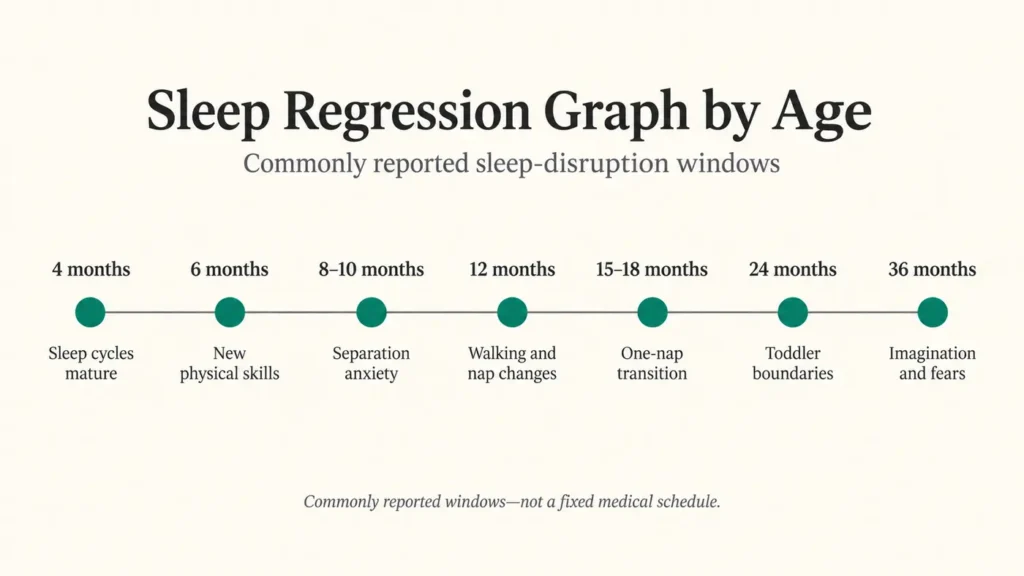
There is also no scientifically established schedule of regressions that every child follows. The popular sleep regression graph seen online represents commonly reported age windows rather than guaranteed developmental events.
Why Sleep May Change Between 6 and 12 Months
The second half of the first year often brings rapid physical development. Babies may learn to roll, sit, crawl, pull to stand, cruise along furniture, or take their first steps.
The drive to practice can temporarily compete with sleep. A baby who has recently learned to stand, for example, may repeatedly pull up in the crib and then become upset because sitting back down is still difficult.
Separation anxiety may also become more noticeable during this period. Your baby may understand that you continue to exist when you leave the room while still feeling distressed by your absence.
Offer plenty of supervised floor time during the day so your baby can practice new movements. If standing in the crib becomes a problem, practice bending the knees and returning to a seated position while your baby is awake. At night, respond calmly and consistently without turning the crib into a place for extended play.
Sleep Changes Between 6 and 12 Months
The second half of the first year often includes rapid physical and social development. A baby may learn to roll, sit, crawl, pull to stand, cruise along furniture, or take early steps.
Babies sometimes practice these skills in the crib instead of sleeping. For example, a baby who has just learned to stand may pull up repeatedly but become frustrated because they haven’t mastered sitting back down.
Separation anxiety may also become more noticeable during this period. Your baby may understand that you still exist when you leave the room but feel distressed by your absence.
During the day, provide safe opportunities to practice new movements. If your baby stands in the crib, help them practice bending their knees and sitting down while they’re awake. At bedtime, keep your response calm and consistent without turning the crib into a place for extended play.
Sleep and Nap Changes Between 12 and 18 Months
Many sleep disruptions during the second year are connected to changing nap needs. Some children begin resisting one of their two naps before they’re consistently ready to follow a one-nap schedule.
A few refused naps don’t automatically mean the second nap should be removed. Illness, travel, teething, excitement, and separation anxiety can all temporarily interrupt daytime sleep.
Instead, look for a pattern. A toddler may be moving toward one nap if they consistently refuse the same nap, take a long time to fall asleep at night, or sleep noticeably less overnight after two daytime naps. Removing a nap too early, however, can leave a child overtired and make both bedtime and nighttime sleep harder.
When a schedule adjustment appears necessary, make it gradually. Moving the remaining nap and bedtime in small steps is usually easier than changing the entire day at once.
Toddler Sleep Changes Around Ages 2 and 3
Toddler sleep difficulties often involve a combination of schedule changes, stronger preferences, and growing imagination.
A 2-year-old may discover that asking for another drink, song, hug, or trip to the bathroom delays bedtime. A 3-year-old may begin describing fears of shadows, darkness, or imaginary creatures. These concerns can feel very real to the child.
Clear and reassuring boundaries usually work better than lengthy negotiations. Decide what the bedtime routine includes, explain it before bedtime, and follow the same sequence each night.
For bedtime fears, acknowledge the feeling without confirming that the imagined danger is real. A simple response such as, “That shadow looks unusual, but you’re safe in your room,” offers reassurance without building a new ritual around the fear.
Sleep Regression or Something Else?
Not every sudden sleep problem is developmental. Before changing the schedule, consider what else has changed in your child’s health, environment, or daily routine.
Illness or physical discomfort
Congestion, coughing, fever, ear pain, reflux symptoms, eczema, or other discomfort may disrupt sleep. Look at how your child behaves during the day as well as at night.
Contact your pediatrician if you’re concerned about symptoms or pain. A child who appears to have difficulty breathing, turns blue or gray, or is unresponsive needs immediate emergency help.
Teething
Teething may cause temporary gum discomfort, drooling, and restlessness. However, prolonged or severe sleep disruption shouldn’t automatically be blamed on teething—especially when a child also has fever, breathing problems, significant lethargy, or other concerning symptoms.
Hunger or feeding changes
Growth and feeding patterns may temporarily affect night waking. Young babies may still need nighttime feeds, and feeding needs vary with age, growth, and health.
Avoid reducing feeds solely to solve a sleep problem without considering your baby’s age and medical needs. Ask your pediatrician if you’re unsure whether nighttime feeding remains appropriate.
Schedule mismatch
A child’s sleep needs change gradually. Bedtime may become difficult if a late nap reduces tiredness, but keeping a child awake too long can also lead to overtired behavior and unsettled sleep.
The American Academy of Sleep Medicine recommends approximately:
- 12–16 hours per 24 hours for infants ages 4–12 months, including naps
- 11–14 hours for children ages 1–2 years, including naps
- 10–13 hours for children ages 3–5 years, including naps
These are recommended ranges rather than exact targets for every child. Consider your child’s total sleep, daytime behavior, and individual health needs.
Changes at home
Travel, daylight saving time, starting daycare, moving, a new sibling, or a different caregiver can affect sleep. In these situations, maintaining familiar bedtime cues may help your child adjust.
How to Manage a Sleep Regression?
You may not be able to prevent every unsettled night, but a measured response can keep a temporary disruption from turning into a confusing routine.
Keep bedtime familiar
Use a short sequence that you can repeat every night, such as:
- Feeding or a light snack when age-appropriate
- Bathing or washing up
- Pajamas
- One or two books
- A song or brief cuddle
- Into the sleep space
The routine doesn’t have to be elaborate. Its value comes from being calm and predictable.
Review the entire day
Look beyond bedtime. Record naps, feeding times, morning wake time, bedtime, and night wakings for several days. The pattern may reveal a late nap, an unusually long wake period, or inconsistent morning times.
Change one part of the schedule at a time so you can judge whether it helps. Allow several days for a reasonable adjustment, unless it is clearly making your child more tired or distressed.
Offer daytime practice
Give babies time to practice rolling, crawling, standing, and sitting while awake and supervised. Toddlers may benefit from active play earlier in the day and a quieter transition before bedtime.
Respond consistently
Choose a response you can maintain. For example, you might briefly reassure your toddler, repeat the bedtime phrase, and leave again. Switching repeatedly between different responses can make the boundary harder for a child to understand.
Consistency doesn’t mean ignoring illness, hunger, pain, or fear. It means keeping your response predictable while meeting genuine needs.
Protect safe sleep
For babies, sleep safety remains more important than preserving a schedule. The American Academy of Pediatrics recommends placing infants on their backs on a firm, flat sleep surface with only a fitted sheet. Keep pillows, loose blankets, bumpers, toys, and other soft objects out of the sleep area.
Avoid weighted swaddles, weighted blankets, and other weighted infant sleep products. The Consumer Product Safety Commission warns that these products can restrict an infant’s movement and breathing.
How Long Does a Sleep Regression Last?
There is no medically established duration that applies to every sleep disruption. Some changes improve within several nights, while others continue for a few weeks as a child adjusts to a new skill, schedule, or routine.
If the problem continues, revisit the possible causes instead of assuming the regression simply needs more time. A sleep log can help you and your pediatrician see whether the issue relates to timing, breathing, feeding, discomfort, or another pattern.
When to Contact Your Pediatrician
Talk with your child’s healthcare provider if your baby or toddler:
- Snores loudly or regularly
- Gasps, chokes, or appears to pause breathing during sleep
- Seems to be in pain
- Has a fever or other signs of illness
- Is unusually difficult to wake
- Is excessively sleepy during the day
- Refuses feeds or produces fewer wet diapers than usual
- Has ongoing sleep difficulties that affect daytime behavior or family functioning
Seek emergency medical care if your child turns blue or gray, is unresponsive, or has severe difficulty breathing.
This guide provides general educational information and cannot determine the cause of an individual child’s sleep problem.
Understanding Your Child’s Changing Sleep
A sleep regression chart can help you recognize common age-related patterns, but it can’t tell you exactly why your child is waking. Look at development, health, feeding, total sleep, naps, and recent family changes together.
Track your child’s current schedule with the Baby Sleep Calculator or confirm their precise age with the Baby Age Calculator. If the pattern feels unusual or you’re concerned about your child’s health, contact their pediatrician.
